Preparing the Cat Food for a Feeding Syringe
You have several options for smoothing out the cat food when using a feeding syringe for feeding a sick kitty.
Experiment with each to see what works best for you…
Note: If using the Hills Cat Food a/d or the Iams Cat Food Max Cal, you won’t need to blend or puree the food because it’s already smooth. If you are using a special diet such as the Hills Cat Food k/d with a feeding syringe, you will need smooth out the food. If your veterinarian gives you a syringe with a tiny, thin tip ask for a tapered tip because food always gets clogged in regular syringes.
Food Processors
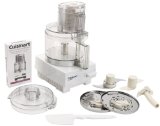
Use a high powered food processor if you add in peas and other foods and you need your food pureed. I puree Hills k/d minced successfully with a Cuisinart and end up with only a few hard chunks. (Tip: Puree 2 cans at one time… it tends to mix better. Pause from time-to-time to scrape the food off the sides and mix in what’s sticking to the bottom of the mixer.)
Potato Masher
If my sick cat has been prescribed the hills k/d, I asked for the minced version minced because I don’t have to add as much water as I do with the regular k/d. However, the k/d minced has bits of rice and other large particles. Before I started using my Cuisinart, I would mash the k/d minced with a metal potato masher for about 5 minutes so that I could syringe feed it. If you don’t have a high powered mixer, I recommend the potato masher.
Strainer or Sieve
Some people press the food through a strainer to remove the larger particles. I’m not sure what some of those particles are. Some bits are cartilage and veins, and others are bits of old food that breaks free of the blending paddles during the manufacturing process. I wonder if some bits are vitamins, minerals and meat? I prefer the high power blenders just so I don’t remove nutrition.
Thinning the Food
The majority of canned foods are too thick to syringe feed without thinning them down just a little bit. Thankfully, Hills cat food has improved their cat food going from the old hard loaf version, to a chunkier minced food with more liquid. You will have an easier time handling a feeding syringe with thinner food and your cat may have an easier time swallowing a thinner food. Thinning the food too much with lower the calorie values so try find a happy medium. Using a tapered tip feeding syringe will provide you with the best success.
There are several Thinning Options to choose from:
Water
Adding water also helps to get more fluids into your cat if needed. The more water you add though, the less calories, protein, fat, vitamins, minerals and electrolytes remain in the food. Try adding a little butter or oil in addition to the water. The oil makes the food more liquid. Adding too much water might cause your cat to feel full and want to stop eating before your get enough calories in.
Oil
An acceptable oil safflower oil. Start off slowly with the amount that you add… oil can act as a laxative. (Especially olive oil).
Butter
I’ve been told that cats really do better with animal fat (over oils), so unsalted, real butter is a good option. Add a bit of unsalted, real butter to each feeding. I buy stick butter (4 sticks to a pound) and add a thin sliver to each meal. Butter makes the food creamy.
NOTE: Do not used drippings from meat since the heat actually produces toxins and destroys the amino acids that are so beneficial.
Unsalted Chicken Broth
You may need to make your own by boiling chicken for several hours. I have trouble finding canned Chicken Broth without MSG. Some also have onion and other mysterious “natural flavors” which could mean almost anything. Be on the safe side and boil your own. You can freeze the chicken broth in ice cube trays for easy portioning.
Lactulose – If your kitty is having trouble with constipation and you are administering Lactulose (by prescription from your vet), add this liquid to the food to help thin it down. You may need to add a few drops of water with the lactulose.
Loading the Syringe
You can load the syringe by either filling from the top with a spoon, measuring spoon, popsicle stick, etc., or by pulling liquidy food up into the syringe. If the food is liquidly, you can also use a funnel taking care to cover the syringe tip with your finger to prevent it dripping out. You will get more calories in if your food is a bit thicker. Also, warming the food makes is more liquid and therefore easier to pull up into the syringe.
Warming the Food
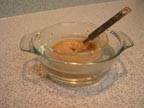
Warm food is more palatable and easier to digest. Warm food is comforting, too. Before you load the syringes, warm the food by placing the dish in a hot bowl of water or if you prefer, use the microwave. Believe it or not, some cats can tell the difference between microwaved food and food warmed gradually in a bowl of hot water. It only takes a couple of minutes to warm food in a bowl of water.
Here’s How I Warm Food in Water:
 |
|
NOTE: Add heat sensitive medicines and supplements after the food is heated. For example, if you are adding acidophilus, the good live bacteria for digestion, don’t kill them in the microwave!
If you find that the food cools down too quickly once you load it into the syringes, keep the loaded syringes in a “warmer” to keep them warm as your feed.
For example:
- Wrap the loaded syringes in a warm, wet wash cloth and place in a sealable plastic dish that you can open as you go.
- Place the loaded syringes, tips upright, in an insulated cup containing warm water. (Not too hot because the food will get too hot.)
Tips
Tip: Prepare breakfast the night before and refrigerate in a baby food jar, covered jello dish, etc. The next morning, warm up the food by placing it in a bowl of hot water.
Tip: Prepare all the food for the day at one time and refrigerate until needed. Prepare your basic recipe and add any medicines as your need them.
Tip: Hills says that after opening, their a/d food can last a total of 3 days in the refrigerator. The can is lined, so it’s safe to leave the food in the can.
Tip: If you load the syringe by pulling the food up into it, warm the food first to make it more liquid.
Go to Feeding Techniques
Go to Assist Feeding home page
Disclaimer: Kathy Fatheree is not at all a medical expert. Contents of this web site are a collection of Kathy’s assist feeding experiences as well as the experiences of other cat owners who have assist fed their cats. While every effort has been made to ensure the accuracy of the information, Kathy Fatheree or anyone associated with this web site cannot be held responsible for anything that may happen as a result of using the information on this site.